International Driving Permit vs. Driving License

)
When planning to drive abroad, one of the most crucial documents you may need is an International Driving License or more accurately, an International Driving Permit (IDP). However, many people often confuse these terms with their regular domestic driving license. While both are essential for driving, they serve different purposes, especially when crossing international borders. In this article, we’ll dive into the differences between an International Driving Permit and a domestic driving license, and why understanding these distinctions is vital for anyone looking to drive while traveling abroad.

What is a Driving License?
In most countries, obtaining a driving license involves passing a series of tests, including a written exam on traffic laws and a practical driving test. Once you have a driving license, you are legally allowed to drive in the issuing country, and in some cases, it may also allow you to drive in certain foreign countries. However, outside of your home country, your domestic driving license alone might not be sufficient to legally drive in all countries—this is where the IDP comes into play.
What is an International Driving Permit (IDP)?
An International Driving Permit (IDP) is an official document that translates your domestic driving license into several different languages. It is recognized in over 150 countries and serves as a supplement to your regular driving license, allowing you to legally drive abroad. The IDP includes your name, photo, and personal details in multiple languages, which helps local authorities easily verify your identity and driving credentials, even if they don’t speak your language.
It’s important to note that an IDP is not a standalone document. It must be used in conjunction with your domestic driving license. Without your original driving license, the IDP is not valid and cannot be used independently to drive in foreign countries.
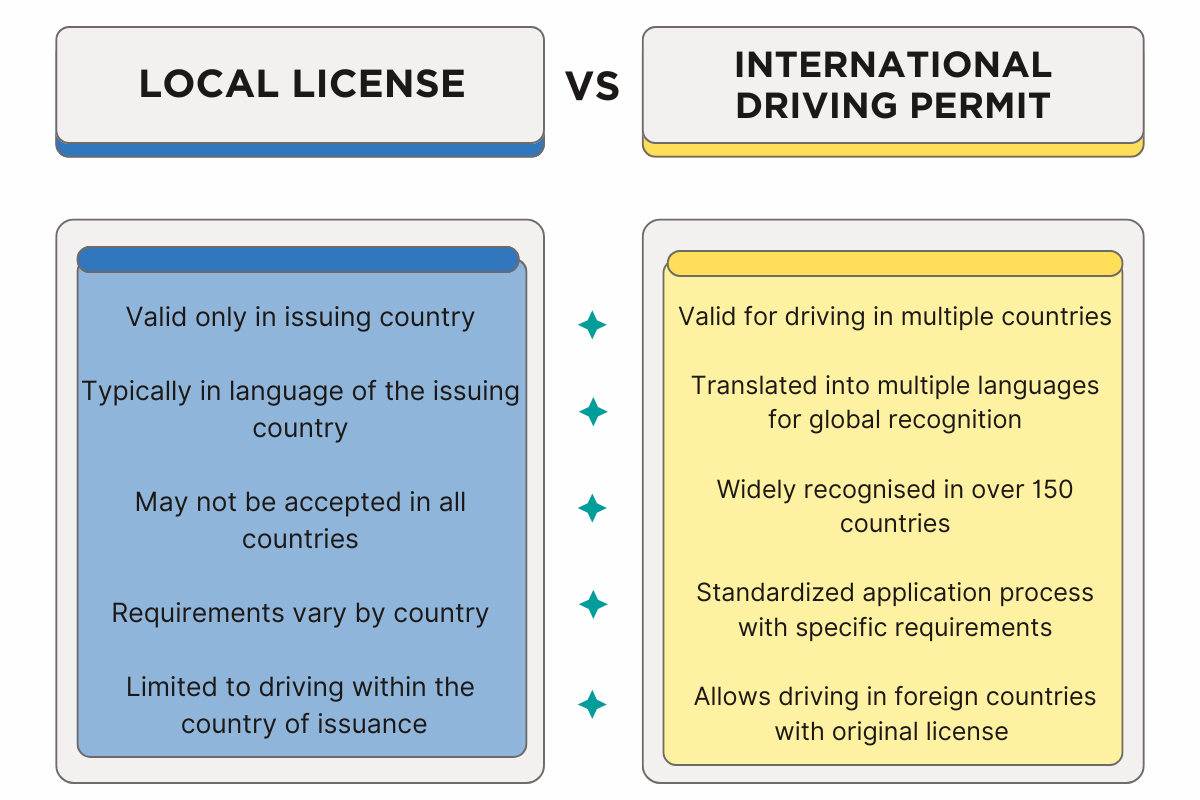
Key Differences Between an IDP and a Domestic Driving License
Now that we understand what an International Driving Permit and a driving license are, let’s explore the key differences between the two:

Why You Need Both?
If you’re planning to drive in another country, having both a domestic driving license and an International Driving Permit is necessary. Many countries require foreign drivers to carry an IDP in addition to their domestic license to rent a car or even to drive legally on their roads.
Additionally, car rental agencies in foreign countries require an IDP before they will allow you to rent a vehicle. This is particularly common in non-English-speaking countries or those with strict driving regulations.
How to Obtain an IDP?
Getting an International Driving Permit through ITCA is quick and hassle-free. Simply follow these steps:
-
Apply Online: Complete the secure application form on our website.
-
Upload Required Documents: Provide a copy of your valid national driver’s license and a passport-sized photo.
-
Choose Your Preferred Option: Select your validity period and delivery method (soft copy, hard copy, or both).
-
Make Payment: Pay the processing fee securely online.
Conclusion
Understanding the differences between an IDP and a domestic driving license is crucial for any international traveler planning to drive abroad. While your domestic driving license is vital for driving in your home country, an IDP serves as an essential document that ensures you can drive legally and safely in foreign countries. By carrying both documents, you’ll be well-prepared for any road adventures that await you on your travels.
Remember, whether you’re embarking on a cross-country road trip or simply need to navigate through a foreign city, having the proper driving documents in hand is key to a hassle-free and enjoyable experience. Safe travels!